
Places to Savor Island Time
Honjima
Honjima
Honoring the fishermen of a changing Setouchi with empathy and care
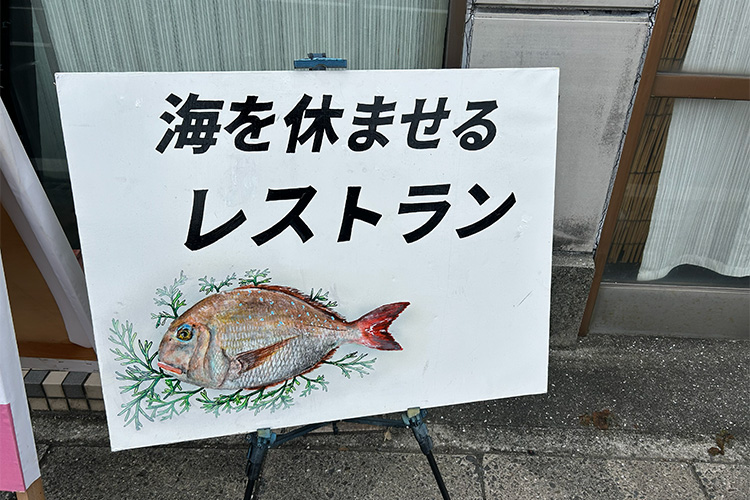
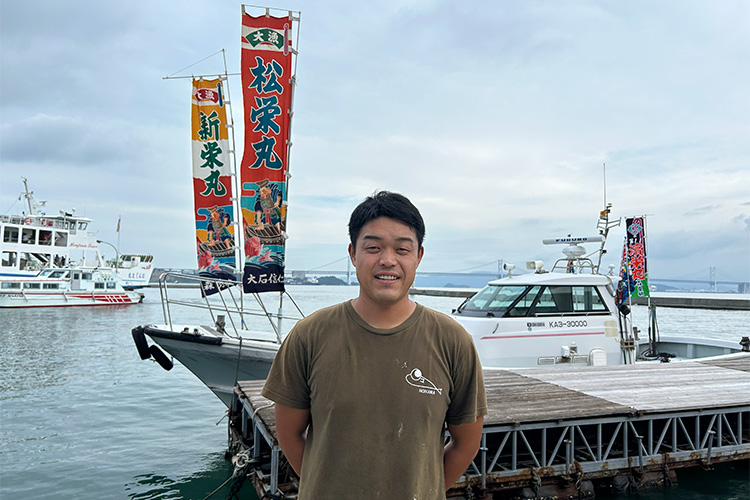
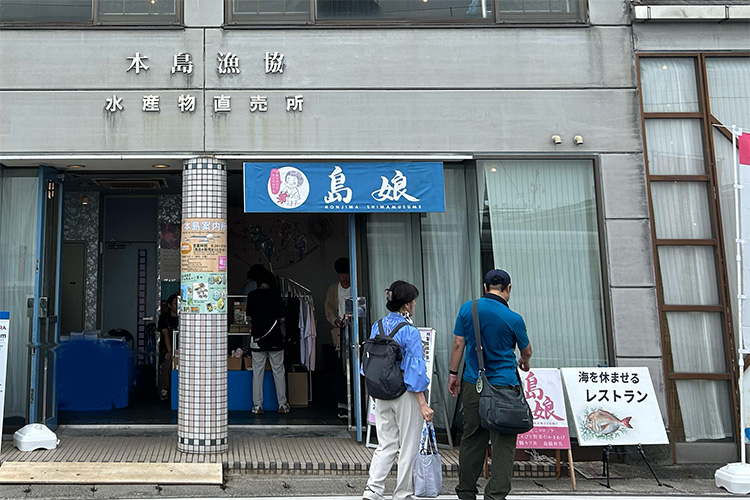
As soon as you arrive at Honjima Port, a unique restaurant name catches your eye as soon as you turn left.
The restaurant is run by Kazuhito Oishi, a fisherman and head of the Honjima Sakana Club, a group of young Honjima fishermen who share a love for the Seto Inland Sea.
In the Seto Inland Sea, local fish such as octopus, which has been living in the Seto Inland Sea for a long time, and migratory fish such as Spanish mackerel that come in from the Pacific Ocean used to coexist, but in the past four to five years the number of migratory fish has decreased dramatically, and the fishing industry has shifted to mainly local fish.
Concerned about the overabundance of groundfish, Mr. Oishi started aquaculture, which was no longer practiced in Honjima. Through efforts to increase the value of unused fish such as Chinu (black sea bream) and the Honjima Sakana Club's dietary education initiatives, he continues to search for a model that will allow fishermen to make a living while putting as little burden on the ocean as possible and allowing it to rest.
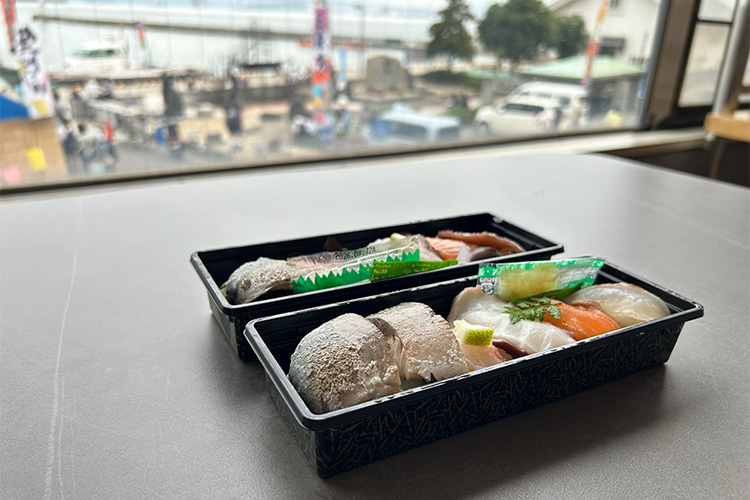
The mackerel and octopus in the nigirizushi in the photo are from the Seto Inland Sea. The fishery is one of the few in Japan that can provide a stable supply of fresh mackerel. Please enjoy them along with Mr. Oishi's passion for the sea.
Please check Instagram ( @shiwaku_honjima ) for the menu and nigirizushi varieties offered at this restaurant. It is served with a combination of seasonal fish.
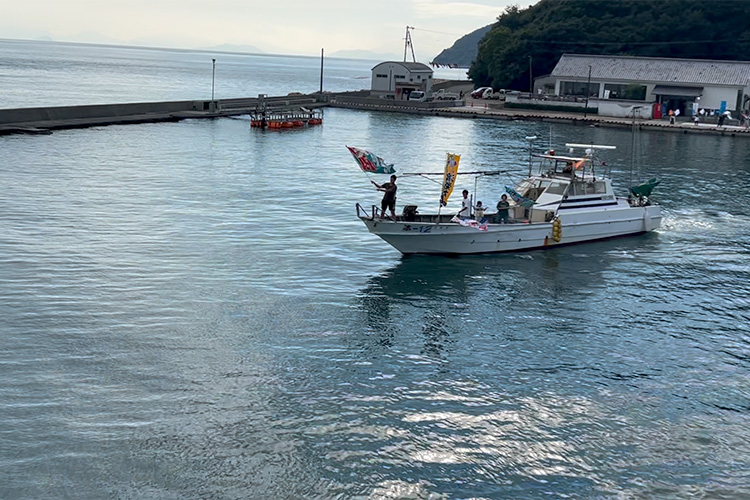
On some days, Oishi-san's boat will be at the harbor to see everyone off as they leave the island.
The restaurant is run by Kazuhito Oishi, a fisherman and head of the Honjima Sakana Club, a group of young Honjima fishermen who share a love for the Seto Inland Sea.
In the Seto Inland Sea, local fish such as octopus, which has been living in the Seto Inland Sea for a long time, and migratory fish such as Spanish mackerel that come in from the Pacific Ocean used to coexist, but in the past four to five years the number of migratory fish has decreased dramatically, and the fishing industry has shifted to mainly local fish.
Concerned about the overabundance of groundfish, Mr. Oishi started aquaculture, which was no longer practiced in Honjima. Through efforts to increase the value of unused fish such as Chinu (black sea bream) and the Honjima Sakana Club's dietary education initiatives, he continues to search for a model that will allow fishermen to make a living while putting as little burden on the ocean as possible and allowing it to rest.
The mackerel and octopus in the nigirizushi in the photo are from the Seto Inland Sea. The fishery is one of the few in Japan that can provide a stable supply of fresh mackerel. Please enjoy them along with Mr. Oishi's passion for the sea.
Please check Instagram ( @shiwaku_honjima ) for the menu and nigirizushi varieties offered at this restaurant. It is served with a combination of seasonal fish.
On some days, Oishi-san's boat will be at the harbor to see everyone off as they leave the island.
494-6 Tomari, Honjima-cho, Marugame City, Kagawa Prefecture, Japan
▶View in Google Maps
▶View in Google Maps