Awashima art activities supported by the island's grandmothers Islander Interviews – Ideal for Your Trip Home
Etsuko Matsuda, a.k.a. "E-chan," an island volunteer at the Awashima Artists' Village, an island art facility that opened in 2010, has maintained a warm relationship with artists and visitors from Japan and abroad.
At the Awashima Artists' Village, artists stay on the island for nearly six months and create their works together with the islanders. The artists stay on the island for nearly half a year and work together with the islanders to create artworks. We asked them to tell us how they have maintained ties that transcend generations and regions, how they welcome people from outside the island, and the reason for the warmth that is unique to Awashima.
-
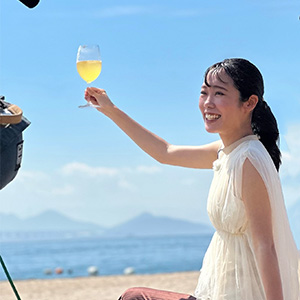
Announcer of island life
Mana

Announcer of island life
Mana
Born in Yokohama. After visiting the Setouchi International Art Festival as a student, she fell in love with the islands and moved to Kagawa, where she joined Setonaikai Broadcasting, covering art, traditional culture, and daily life on the islands.
-
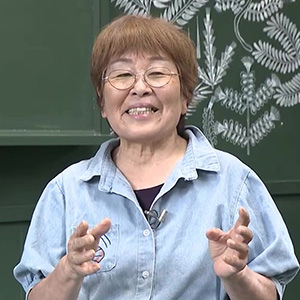
Lives in Awashima
Etsuko Matsuda
Lives in Awashima
Etsuko Matsuda
Awashima Artists' Village, an art facility that has been operating in Awashima since 2010, is a volunteer group of islanders. Known affectionately as "E-chan," she has been connecting Awashima with artists and tourists for 15 years. She is a super grandmother who not only supports art, but also demonstrates her creativity by creating embroidered works and artworks using buoys. Click here for the interview
A place that feels like home, where you'll want to return again and again.
"After staying and creating Awashima, everyone goes back to where they live once their work is finished, right? But thanks to this place called Awashima Artist Village, they come back again. That really makes me happy."
Speaking these words is Etsuko Matsuda, affectionately known as "E-chan" by the islanders. As a volunteer resident at Awashima —an art facility utilizing a closed junior high school building—she has maintained warm interactions with artists and visitors. She herself creates numerous objects using boat buoys and produces picture books.
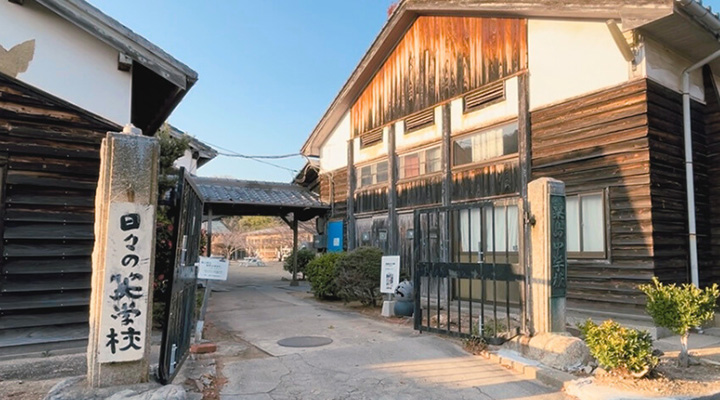
Awashima Artist Village is an art facility utilizing the former Awashima building. In 2010, Kagawa Prefecture launched an artist-in-residence program here, where young artists stay Awashima for several months, immersing themselves in creating works while collaborating with island residents.In 2014, following its participation in the Setouchi Triennale, the project was independently continued by Mitoyo City, appointing Katsuhiko Hibino of Tokyo University of the Arts—who had connections Awashima —as its general director. Since then, artists from Japan and abroad have been invited annually.
When this project first started, the islanders didn't understand art at all. Even when we held workshops, no one came because they didn't know what we were doing. We patiently explained that everyone would help create the artwork together, and that it was okay if they couldn't draw. Gradually, more people began to understand, and they started participating in the workshops.
The islanders, who were art novices, saw their hidden talents blossom as they assisted with artwork creation. For pieces by artists who Awashima stayed and created Awashima —Maki Ohkojima and Mayur Vayeda, a member of India's Warli ethnic minority—the island mothers spent months embroidering motifs of whale hearts and schools of fish. Their delicate and intricate expressiveness astonished both the artists and visitors alike.
"The grandmothers who helped with the embroidery are proud too. It must be wonderful to see something they made preserved like this."
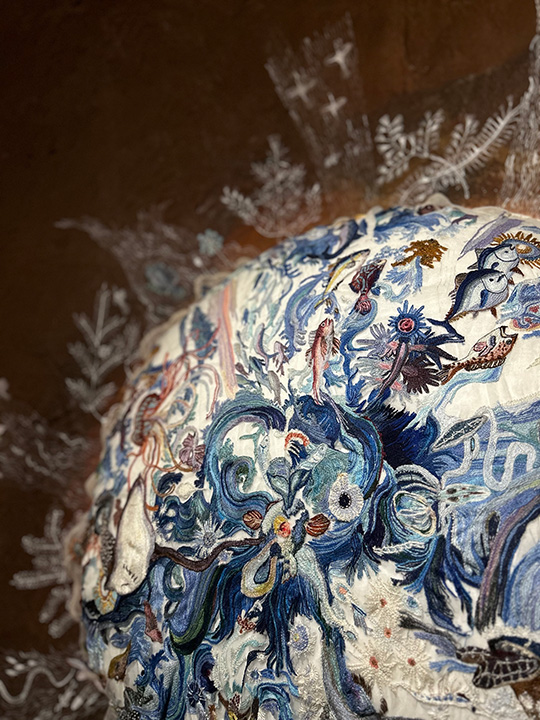
The embroidery skills of the island women are put to use in creating Awashima, the "Embroidered Sacoche." Inspired by the work of Mayur Vayeda, each one is handmade by the island mothers, making it a truly one-of-a-kind souvenir. Awashima to produce these items as volunteers.
"Proceeds from these embroidered sacoches go toward maintaining the Artist Village. So while selling them is an important goal, what's even more significant is that it created a place for the island grandmothers to gather and chat. During the day, they tend to stay home if they have no particular errands. But having the purpose of making these sacoches means they come out, gather together, and can work while chatting freely. This is incredibly important."
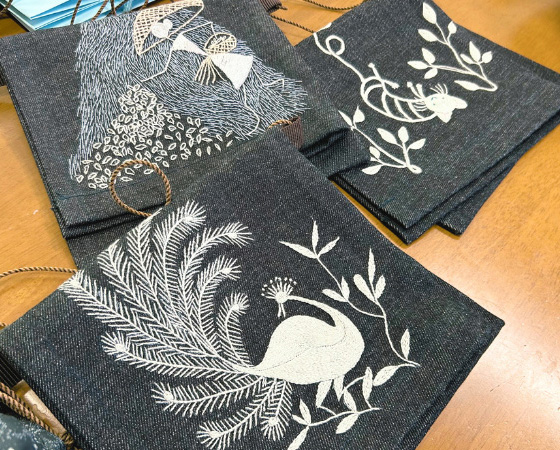
Many people Awashima, and the connections between islanders, artists, and visitors were made possible because of Awashima as a base.
"I hope this place continues to be a 'place to return to' for the artists. It's been a long time since Awashima Artist Awashima was established in 2010, but recently, young volunteers and people who love the island have started coming by. I feel like it's currently being passed on to the younger generation."
In 2025, two artists stayed and created works at the artists' village. These were exhibited during the Autumn Session of the Setouchi International Art Festival 2025, attracting many tourists.
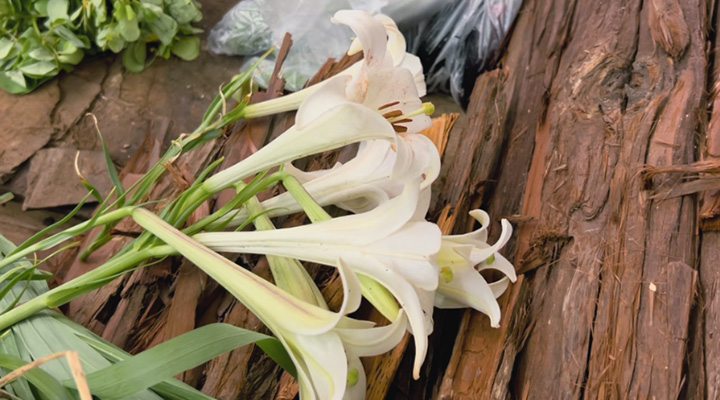
Island plants and vegetables brought by the islanders became the materials for the artwork.
Working during the hot summer months, I really had to be mindful of everyone's health. The grandmothers helping out—I wanted them to keep going, but I couldn't let them push themselves too hard and get sick. Finding that balance was tough. In the end, I was relieved that the piece was completed without anyone getting sick.We spend a lot of time with the artists, so we get to know their personalities and understand the feelings they pour into their work. That's why I want to tell our customers, 'This artist is like this, and they created this piece with these feelings.' I want to convey their message as much as possible, and I hope our customers can see all Awashima."
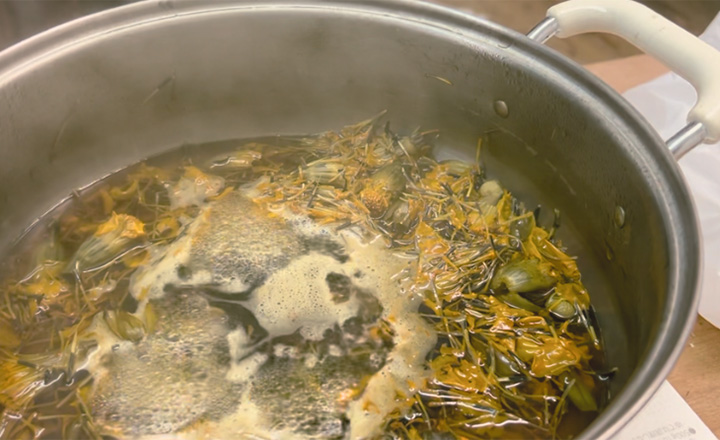
The islanders painted pictures using pigments extracted from plants and vegetables.
Awashima Artist Village is open every Saturday afternoon, even outside the Setouchi Triennale period. Beyond viewing the cave and whale artwork (the permanent exhibition "Cave Mural as Narrating the Story of Where We Came From" and "The Story of a Whale Being Reborn as Oxygen"), you can enjoy island time by purchasing embroidered sacoche bags or chatting with the island mothers who create them.Experience the Awashima warm art of Awashima, born from the daily lives shared by artists, islanders, and volunteers.
-

Ten years of painting island time dwelling in nameless plants through Japanese art.
-

Island Time Near the Seto Ohashi Bridge—Connecting History and Nature to the Future.
-

Yamaguchi Store, which once supported island life, and Ogijima old tales.
-
Awashima art activities supported by the island's grandmothers
-

World-renowned faceted glass artist finds the starting point of his creation in Shodoshima
-

The island time of Teshima resident artists that enriches both their works and their lives.
-

Why the "Sunset Guy" has been shooting only Naoshima sunsets for 10 years
-

Behind the Scenes at Naoshima Art Sanctuary - Interviews with a Famous Guide
-

What is the best season to visit Naoshima & tips to enjoy Setogei many times over?
-

Global Grandpa welcomes you in his old house.
-

Love at first sight on the island! How to enjoy Megijima after moving to the island.
-

Artists talk about Teshima as more than just art.
-

The way to enjoy Naoshima beyond art, discovered through living and playing.