
Yamaguchi Store, which once supported island life, and Ogijima old tales. Islander Interviews – Ideal for Your Trip Home
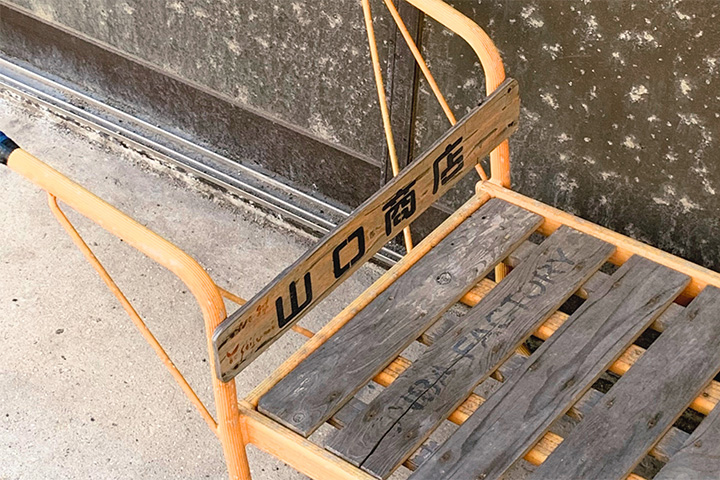
Yamaguchi Shōten, located just up the alley Ogijima, has long supported the lives Ogijima. Yasuyo Yamaguchi moved from her hometown of Osaka Ogijima her husband's hometown of Ogijima upon marriage and has energetically run the store ever since.Her stories share the surprises of her early days on the island and what life was like back when nearly 1,000 people lived here. Though the shop is now closed, its building and many retro items hold countless memories. Let Yasuyo's gentle voice guide you on a journey through the memories Ogijima Yamaguchi Shoten.
-
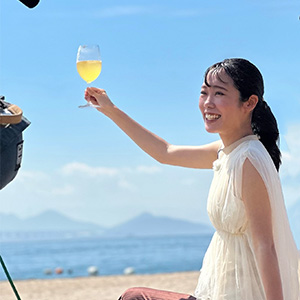
Announcer of island life
Mana

Announcer of island life
Mana
Born in Yokohama. After visiting the Setouchi International Art Festival as a student, she fell in love with the islands and moved to Kagawa, where she joined Setonaikai Broadcasting, covering art, traditional culture, and daily life on the islands.
-
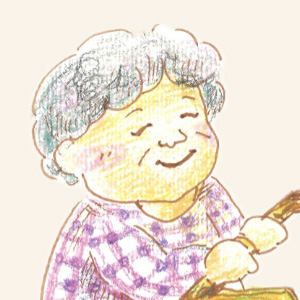
Lives in Ogijima
Yasuyo Yamaguchi
Lives in Ogijima
Yasuyo Yamaguchi
After marrying, Ogijima from her hometown of Osaka Ogijima, her husband's hometown, and together they took over the "Yamaguchi Shoten" store, Ogijima had been operating Ogijima since just after the war. She obtained various qualifications—in cooking, gas handling, accounting, and more—to support the islanders' daily lives and energetically managed the store. Interview here
A girl from Osaka Ogijima as if guided by fate, and it has been about 60 years.
We hear about her days at the store that supported island life and her memories of the island back then.
Yamaguchi Shōten, located just off a narrow alleyway from Ogijima Port. This shop, which once supported the lives of the island's residents, still holds many memories alongside its building and numerous retro items, even after closing its doors. We spoke with Yasuyo Yamaguchi, who ran the shop for many years, Ogijima.
"Back then, we sold everything—vegetables, tofu, konjac, meat, you name it. We also had stationery and daily necessities. At that time, there were about 100 children in the elementary and junior high schools."
The store's origins date back to just after the war ended.
" Ogijima the keeper Ogijima. So he handled boats, and when he went to Takamatsu, he'd bring back things like sugar that the islanders had asked him to get. The place where the store is now was originally used as an air-raid shelter during the war, but somehow it gradually became the island's supply hub."
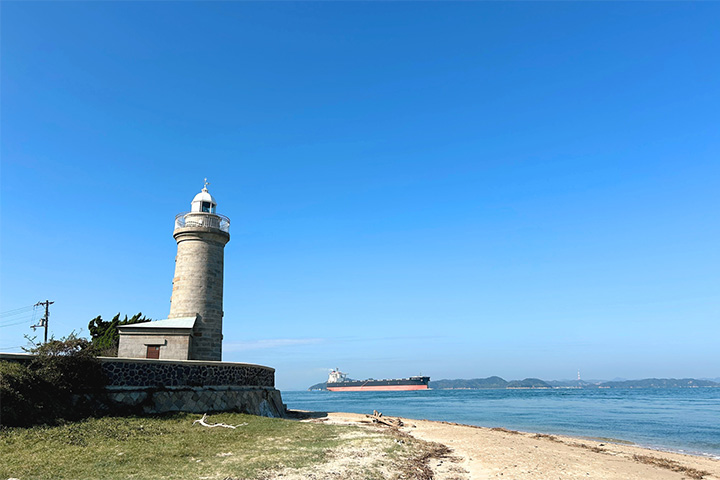
Ogijima Lighthouse
Yasuyo-san started running the shop in her twenties. Originally from Osaka, she Ogijima her husband's family lived, after getting married and took over the shop from her husband's relatives.
Freshly caught large rockfish from the harbor and live octopus were brought into the shop, and she would prepare them one after another... She says everything she saw and heard was like another world.
"It was probably a rare time for outsiders to move to the island. There was an islander grandmother who said, 'People had it much harder in my day,' but I was the first in a long while. I was busy taking care of my family while also handling the shop's supplies, paperwork, and all sorts of things. Even though I knew no one there, I didn't have time to feel lonely. Everyone worked so hard. From the moment you woke up in the morning, work was already waiting. It was hectic, always thinking 'I have to do this, I have to do that.'"
Actually, Ogijima when she was a girl living in Osaka. It was during a trip to Shikoku.
"I was looking out over the Seto Inland Sea from the top of Yashima Mountain in Takamatsu City, and I saw an island. 'People live on that tiny island!' I thought. Ogijima."
At that time, Yasuyo never imagined she would actually go to the island. But while working in Osaka, she met a man Ogijima as if guided by fate.
"Back then, I was attending school, got my Bookkeeping Level 2 certification, and was working in accounting. It was during that time I met my husband.Coincidentally, he was a subordinate of my father's friend. He was an interesting person, detached from the mundane world. He had a rich imagination that defied his age. I suppose we were drawn together by the gods of chance."
Thus, her marriage became the catalyst Ogijima the island she had once gazed upon from the mountains.
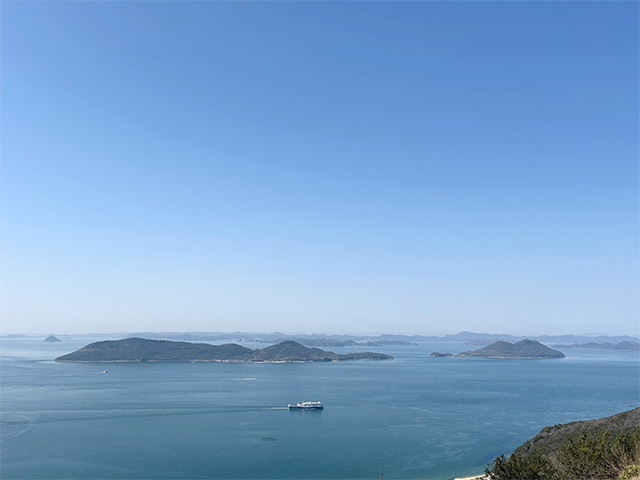
Megijima (left) and Ogijima (right) as seen from the summit of Mount Yashima
Yasuyo, who took over a shop Ogijima, worked tirelessly. She not only handled the accounting but also obtained new qualifications for gas handling and a culinary license.
"I'd load the gas onto a unicycle and carefully navigate the steep, narrow slopes, wobbling but managing to keep the heavy load from tipping over. When everyone was busy, I'd go myself—since I had the qualifications, they could trust me to install it safely. I'd take it out, install it, and record the numbers."
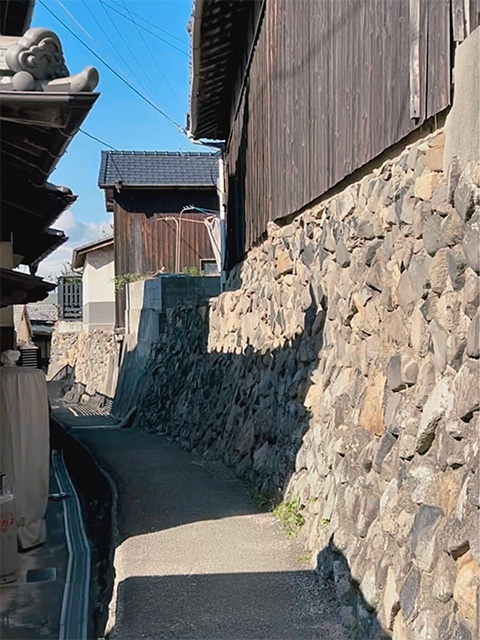
Ogijima narrow, winding alleys
"Whether it was soy sauce or sake, those one-liter bottles were heavy. At first, I couldn't carry ten, so I carried boxes of six. But then the female assistants would say I 'lacked strength,' and that really stung.I couldn't fillet raw fish either—there was nothing I could do. But I could handle purchasing, pricing, and bookkeeping because I'd done accounting before. We expanded the shop every few years—adding an extension to create an office... Since young people on the island had nowhere to enjoy themselves, I got my culinary license. When I made oden with daikon and potatoes during winter, everyone was delighted."
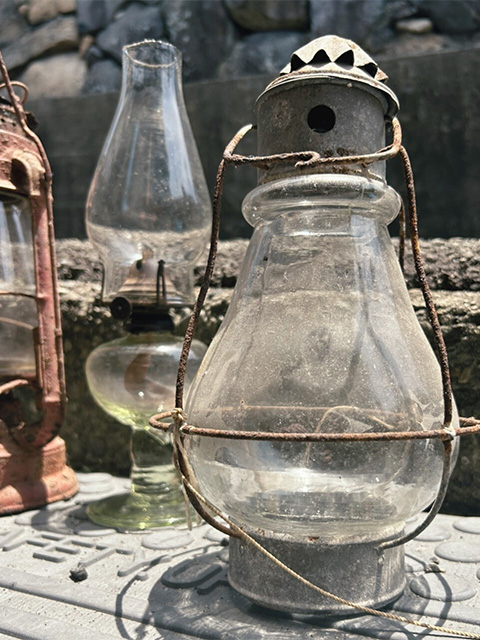
Retro goods still carefully stored in the shop
Yasuyo, drawing on the accounting skills she honed during her time in Osaka, gradually expanded her capabilities one by one, becoming an indispensable pillar supporting island life. Her eyes hold the imprinted landscapes Ogijima, transformed by the passage of time.
Ogijima first arrived Ogijima, the population was around 800 people. She says that even earlier, after the war, about 1,200 people lived here. Many people made their lives here, including those who escaped the war and those who came as evacuees. Back then, houses and fields were packed all the way up the mountainside.
"Looking at old photos, there's very little green. Only the top of the island is green. When I arrived, they were planting pyrethrum. Back then, there were no insect repellents yet, so people would pick the flowers, dry them, and sell them. They also grew tobacco leaves and dried them. Everyone had various jobs."
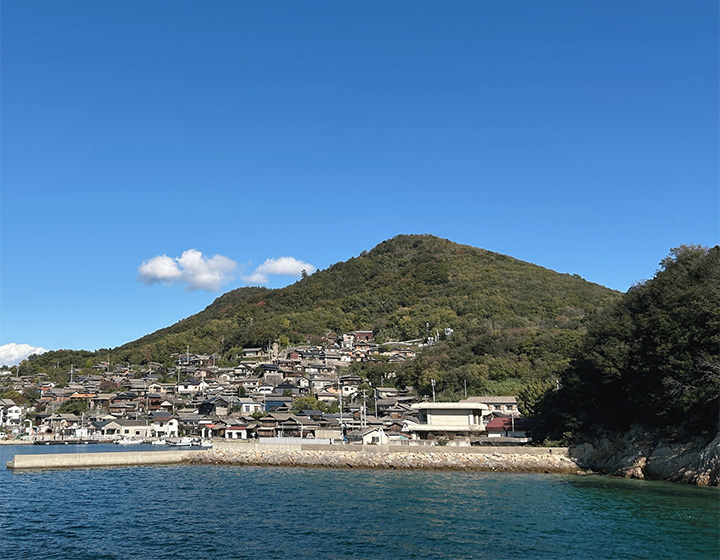
Current Ogijima
I also heard that they raised cattle on the island and leased them to farmers in Kagawa during the busy farming season, receiving precious rice in return.
"The cows had to carry loads once they crossed the island, so it seems they were really exhausted. That's why Ogijima, they weren't made to work anymore—they were just let to play. It seems the children's job was to feed the cows on the island and go out to cut grass.There were even ships specifically for transporting cattle.
Cattle were hired during rice planting season, and when it was over, they'd return carrying several bales of rice on their backs. Ogijima were incredibly grateful for this, since they couldn't grow rice themselves. The hills are low and steep, making water scarce. So they were thankful the cattle brought them rice.
People around 80 years old now seem to remember having cows when they were elementary school kids. Ogijima, there were no cows, but there were pigs. A few households raised them, and I heard stories about pigs being born in the evening, keeping them up all night. I even went to see a mother pig raising her piglets. They were adorable."
Furthermore, on the mountain path Ogijima, fairy fireflies danced, creating a fantastical scene.
"Every night, I walked up the path into the mountains with my husband's cousins, starting from the road leading to the lighthouse. The path was maintained further back than the current lighthouse or narcissus fields.If we started climbing around 9 PM, the fireflies would beautifully light up and rise up from below around 11 PM. My cousins even made a book about the fireflies of Ogijima. After the power poles were installed along the lighthouse path and it became brighter, the fireflies became fewer, but when it was dark, there were many."
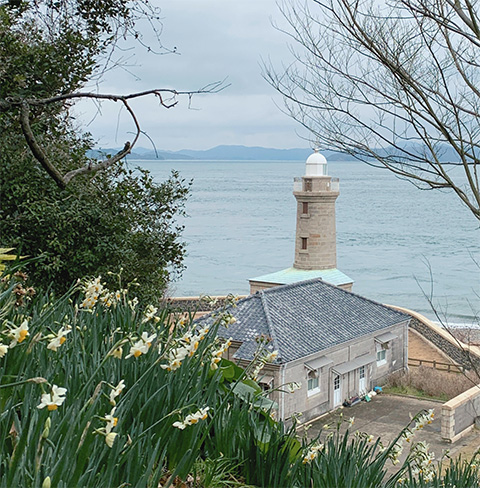
Ogijima in winter
Ogijima, and before I knew it, over 60 years had passed. Yasuyo-san lived each day with all her might, brightly and powerfully supporting the lives of the islanders. Though the shop has completed its role, its history, memories, and Yasuyo-san's dazzling smile continue to shine brightly.
-

Ten years of painting island time dwelling in nameless plants through Japanese art.
-

Island Time Near the Seto Ohashi Bridge—Connecting History and Nature to the Future.
-

Yamaguchi Store, which once supported island life, and Ogijima old tales.
-
Awashima art activities supported by the island's grandmothers
-

World-renowned faceted glass artist finds the starting point of his creation in Shodoshima
-

The island time of Teshima resident artists that enriches both their works and their lives.
-

Why the "Sunset Guy" has been shooting only Naoshima sunsets for 10 years
-

Behind the Scenes at Naoshima Art Sanctuary - Interviews with a Famous Guide
-

What is the best season to visit Naoshima & tips to enjoy Setogei many times over?
-

Global Grandpa welcomes you in his old house.
-

Love at first sight on the island! How to enjoy Megijima after moving to the island.
-

Artists talk about Teshima as more than just art.
-

The way to enjoy Naoshima beyond art, discovered through living and playing.