

A Three-Month Artist-in-Residence: From the Clay of Awashimato the Finished Pottery Islander Interviews – Ideal for Your Trip Home
AwashimaAt “ Awashima,” an art facility housed in a former junior high school, an artist-in-residence program has been held annually since 2010.Artist Daichi Taniguchi, who stayed on the island for approximately three months starting in July 2026, conducted research as part of the “ Awashima.” Drawing inspiration from the tile production that once flourished in Awashima, he collected clay from the island’s mountains and created marine observation devices shaped like the tail and scales of “Ryujin-sama,” the island’s traditional sea deity. We asked him to reflect on his three months spent in Awashima—what his days were like, and what charms and discoveries he encountered.
-
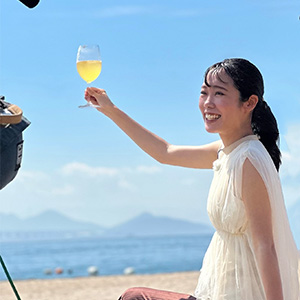
Announcer of island life
Mana

Announcer of island life
Mana
Born in Yokohama. After visiting the Setouchi International Art Festival as a student, she fell in love with the islands and moved to Kagawa, where she joined Setonaikai Broadcasting, covering art, traditional culture, and daily life on the islands.
-
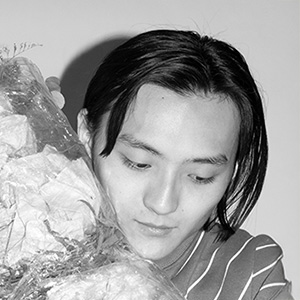
Resident of Tokyo
Daichi Taniguchi
Resident of Tokyo
Daichi Taniguchi
Born in Kagoshima Prefecture, currently residing in Tokyo. While studying media design at the Faculty of Creative Engineering at Kagawa University, she developed an interest in artistic expression and began creating art in Takamatsu.To deepen her understanding of art and artistic research, she enrolled in the graduate program at Tokyo University of the Arts. After spending a year studying abroad at the Academy of Fine Arts Munich, she completed her master’s degree in Advanced Artistic Expression at Tokyo University of the Arts in 2026. Her work explores perception and the body under the theme of “Life Size.” Click here for the interview
Soil that holds the island’s memories, scales of the Dragon God that reflect the sea
Awashima, located about a 15-minute boat ride from the port in Mitoyo City, Kagawa Prefecture. The art facility “ Awashima” has been hosting artist-in-residence programs since 2010, inviting artists from Japan and abroad nearly every year. In 2026, two artists with ties to Kagawa Prefecture—Daichi Taniguchi and Saho Shibata—were invited to stay and create works for approximately three months starting in July.
We spoke with Mr. Taniguchi, who conducted research on the island as part of the “ Awashima” and created works inspired by the land’s memories, history, and way of life, about his days spent at Awashima.
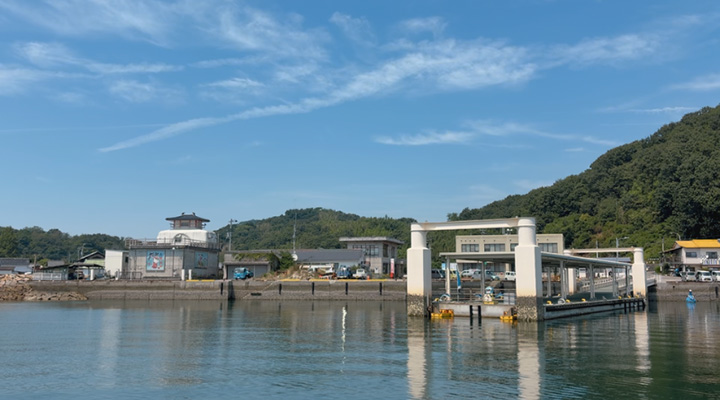
Daichi Taniguchi is from Kagoshima Prefecture. He began his artistic career while attending Kagawa University and went on to pursue graduate studies at the Tokyo University of the Arts. Although he returned to Kagawa regularly to continue his artistic practice, this artist-in-residence program marked his first visit to Awashima.
His residency began in mid-July 2026. The island was in the midst of a scorching summer.Thanks to the lack of rain and favorable weather, Ms. Taniguchi says she was able to immerse herself in her research, such as exploring the island by kayak from the sea. Her interactions with the islanders also gave her strength.
“The islanders were very open from the very beginning, so it felt like they really understood what the residency and my artistic practice were all about. From the start, they told me to feel free to ask for help if I ran into any trouble—I don’t think that happens very often elsewhere, so I was incredibly grateful.”
Whenever I walk around carrying my kayak, the islanders call out to me, asking, “What are you up to today?” or “Where are you headed?” When I ask them about the mountains, they share the kind of wisdom only someone who knows the island well can offer—advice like, “You should go this way,” or “It gets dark at this time of day, so you’d better skip it.” This comfortable rapport with the islanders served as a source of inspiration for Mr. Taniguchi’s work.
Mr. Taniguchi dubbed himself the “ Awashima” and wondered if he could build an observation device to monitor the island’s seas and land. Although he initially envisioned a Buddha-like figure, his conversations with the islanders gradually shaped his concept. On this island, where many residents are former sailors and fishermen, the presence of the sea god is deeply felt. Mr. Taniguchi was particularly intrigued by how fishermen, on days of poor catches, would say, “We gave it to the Dragon God today.”
“I thought the expression ‘I gave the fish to the sea god’—rather than ‘I didn’t catch any’—was really interesting. And when I asked the islanders about the sea, they’d mention things like, ‘We used to have this, but it’s gone now,’ or ‘The fish have become scarce.’ That’s when I started wondering if I could investigate these issues.”
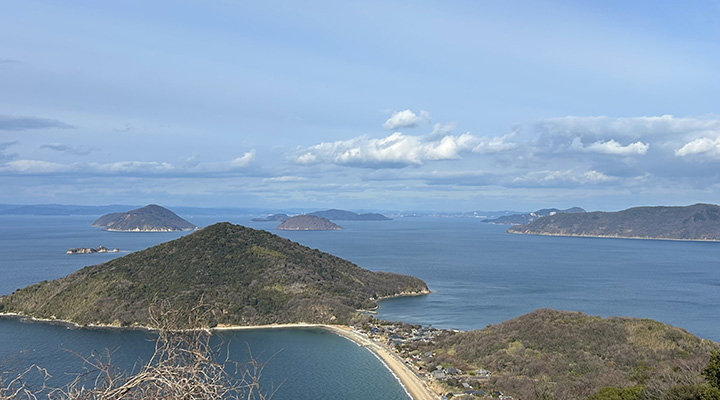
The ocean around Awashimaas seen from Mount Jōno
The Dragon God lives somewhere in the hearts of the islanders. Could we give form to that presence and, at the same time, turn it into a device for monitoring the ocean? That’s how the idea was born: to create the Dragon God’s scales and tail out of pottery and use them as ocean monitoring devices.
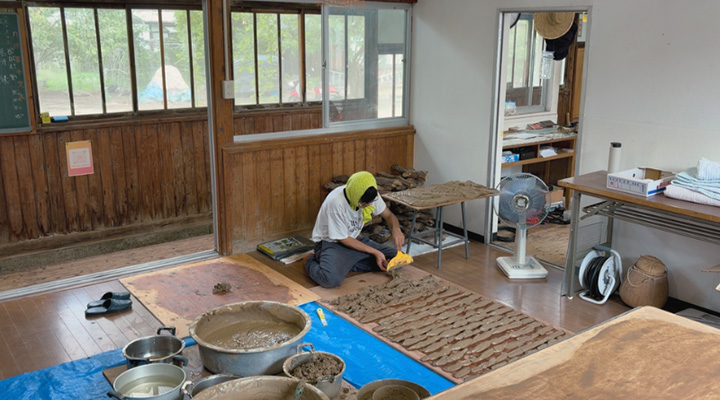
The materials used in the artwork also carry special significance. The tile industry once flourished on Awashima, and the soil from Mount Ashima, located in the northern part of the island, was considered ideal for pottery. However, today the path leading to the mountain is overgrown with dense trees, and almost no one knows where to find the clay.
“Local people say that the soil quality on Mount Ashima is truly unique, and it seems it used to be a place where clay exceptionally well-suited for pottery could be found.”
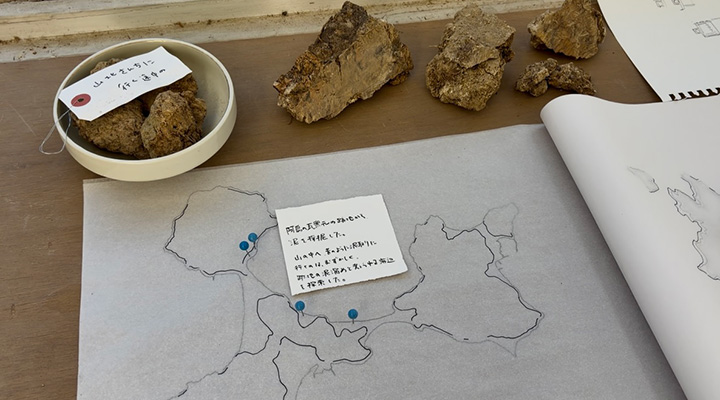
Mr. Taniguchi conducted extensive research, drawing on library resources, interviews with staff at the archives, and conversations with the island’s elders in their 90s. Suspecting that there might have been a “clay pit” near the site of an old pottery kiln, he ventured down unmarked paths alongside islanders and volunteers.
“It’s really hard to explore on my own, so their help was a huge relief.”
After a trial-and-error search, we finally discovered a clay layer. We showed the actual clay to an elder who had once extracted clay from the area, and by comparing it with his memories of the past, we were convinced that this was indeed the clay from Mt. Ashima that we had been searching for.
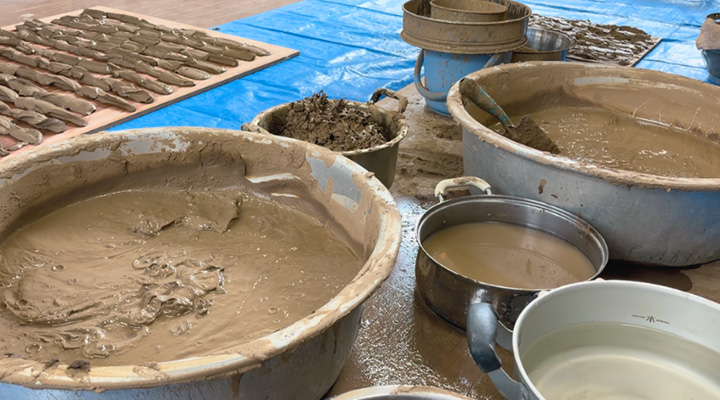
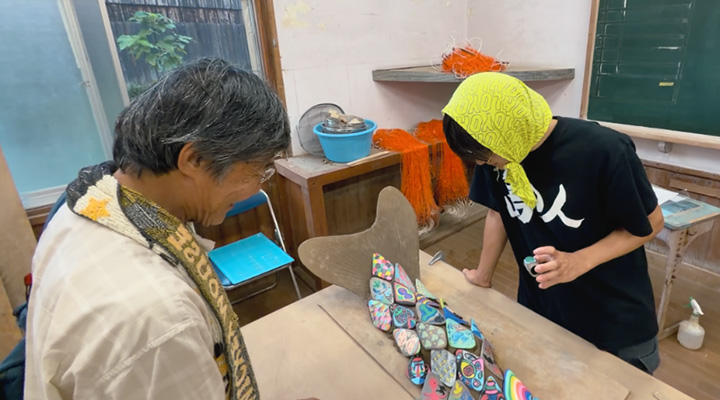
Using the clay they had collected, Mr. Taniguchi held a workshop with the islanders. Each participant painted their own unique designs on pottery shaped like the scales of the Dragon God. The resulting scales featured a variety of patterns, such as wave-like designs and the Umashiro Hachiman Shrine, which appears to float on the sea at high tide.
“It’s precisely because they live on Awashimathat they paint these things—that’s what makes it so interesting.”
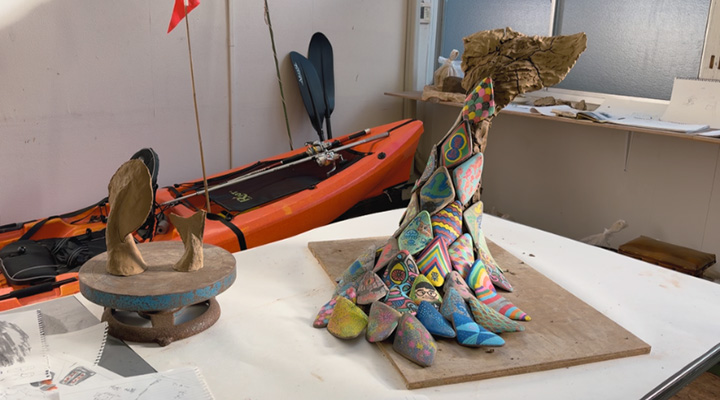
The pottery pieces created in this way were displayed as part of the exhibition. In the future, we plan to submerge them in the ocean as monitoring devices to study the deposits that accumulate on them.
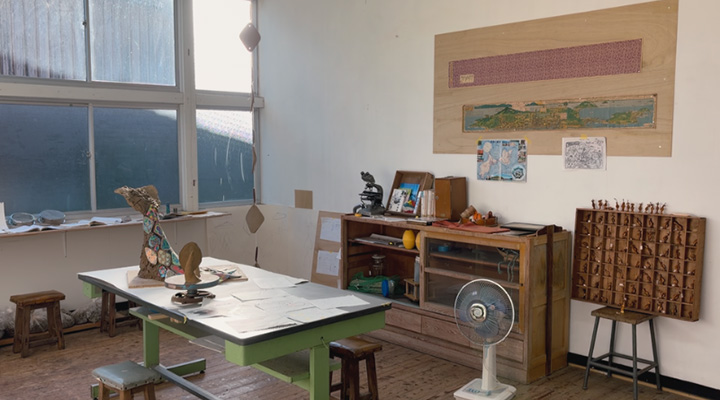
Furthermore, Mr. Taniguchi’s research has brought to light new aspects of the island’s charm. It seems that the roof tiles once produced at Awashimabore horse marks that differed from one kiln to another, and even today, fragments of these tiles—which can still be found in alleys like the one at Awashima—sometimes bear these horse marks.
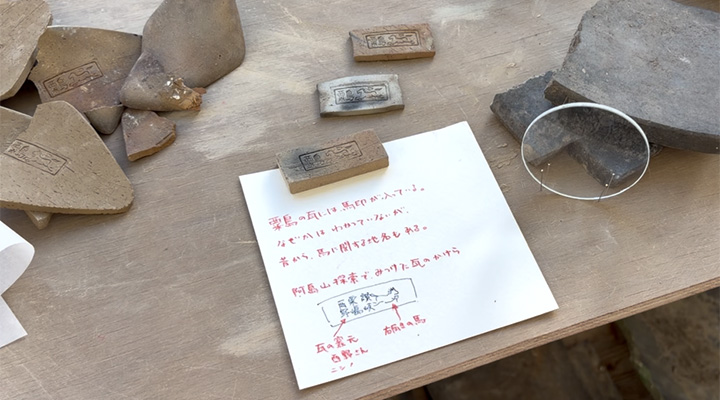
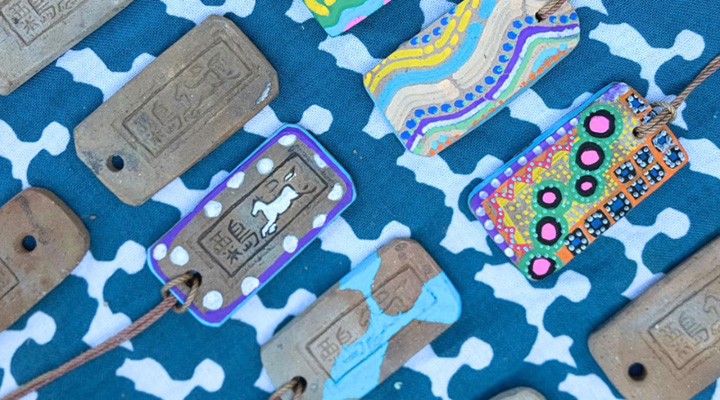
Inspired by this, Mr. Taniguchi created tile keychains featuring his original horse emblem. He also held a workshop where visitors and island residents could freely draw their own designs and take them home.
Looking back on her three-month stay, she says, “I received a lot of help with my research, so I really enjoyed the experience.” While Mount Ashima is a place that’s hard for tourists to access, if you go to “Nishihama”—a sunset spot featured on Awashima—you can see the silhouette of Mount Ashima clearly. If you take a leisurely stroll along the beach, you might just catch a glimpse of the Dragon God someday.
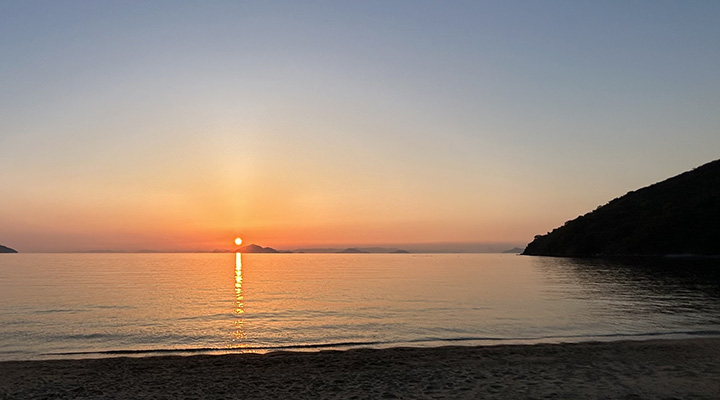
Awashima"Nishihama" and Mt. Ashima (on the right)
You can watch footage of Daichi Taniguchi and Saho Shibata’s creative process and exhibition in the “ News Video ” section, and watch an interview about the artist-in-residence program in “ShimarebiIslander Interviews – Ideal for Your Trip Home ".
The “ AwashimaArtists’ Village,” open every Saturday afternoon, features permanent and archival exhibitions where you can view works from past artists. You may even see volunteers and island residents wearing the “Hajiri” ceramic keychains they made together with Mr. Taniguchi. Please feel free to say hello.
-

A Three-Month Artist-in-Residence: From Clay to Finished Pottery at the " Awashima"
-
ShodoshimaA metal casting artist visits Awashima. What is this foundry that captures the island’s atmosphere?
-

Ten years of painting island time dwelling in nameless plants through Japanese art.
-

Island Time Near the Seto Ohashi Bridge—Connecting History and Nature to the Future.
-

Yamaguchi Store, which once supported island life, and Ogijima old tales.
-
Awashima art activities supported by the island's grandmothers
-

World-renowned faceted glass artist finds the starting point of his creation in Shodoshima
-

The island time of Teshima resident artists that enriches both their works and their lives.
-

Why the "Sunset Guy" has been shooting only Naoshima sunsets for 10 years
-

Behind the Scenes at Naoshima Art Sanctuary - Interviews with a Famous Guide
-

What is the best season to visit Naoshima & tips to enjoy Setogei many times over?
-

Global Grandpa welcomes you in his old house.
-

Love at first sight on the island! How to enjoy Megijima after moving to the island.
-

Artists talk about Teshima as more than just art.
-

The way to enjoy Naoshima beyond art, discovered through living and playing.